




































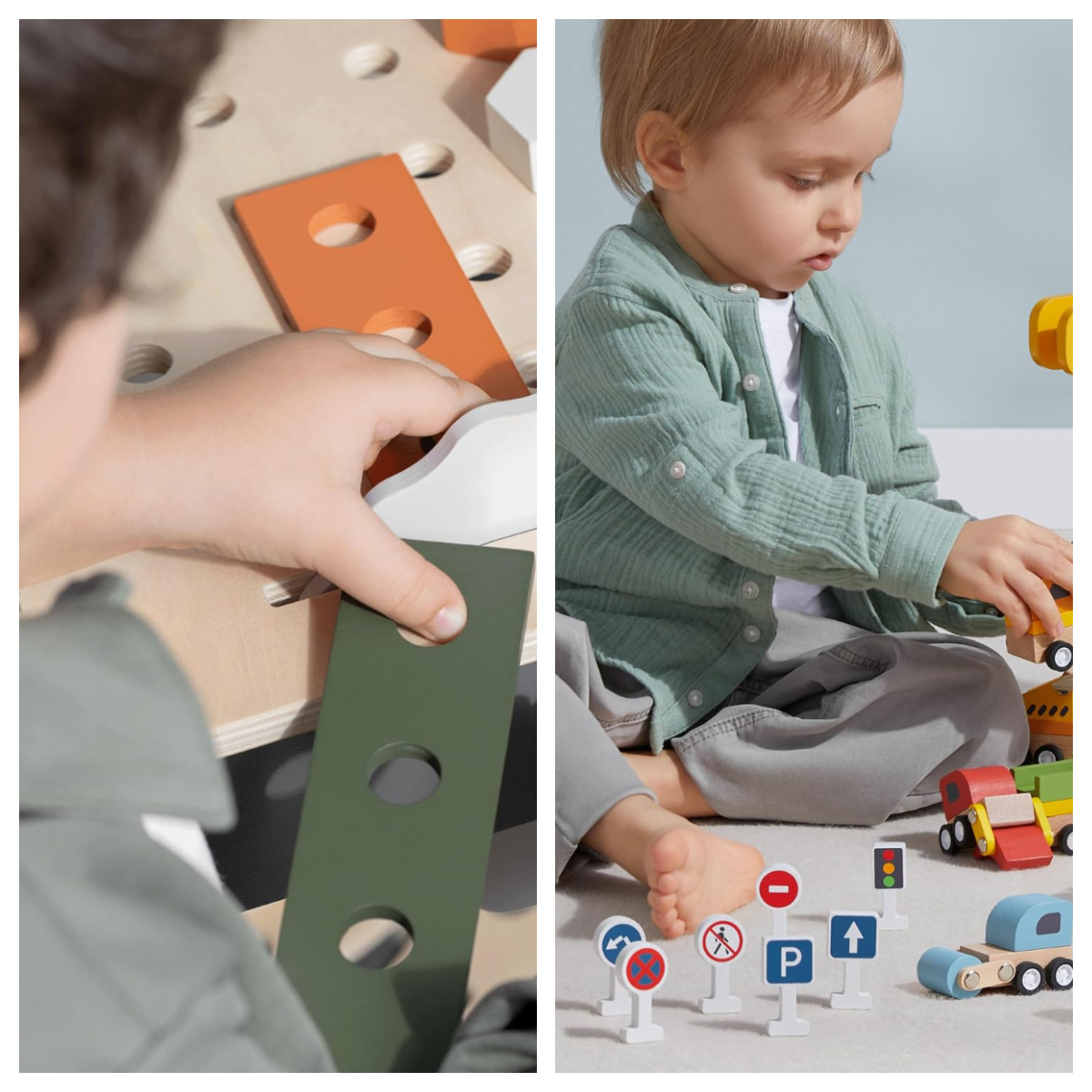
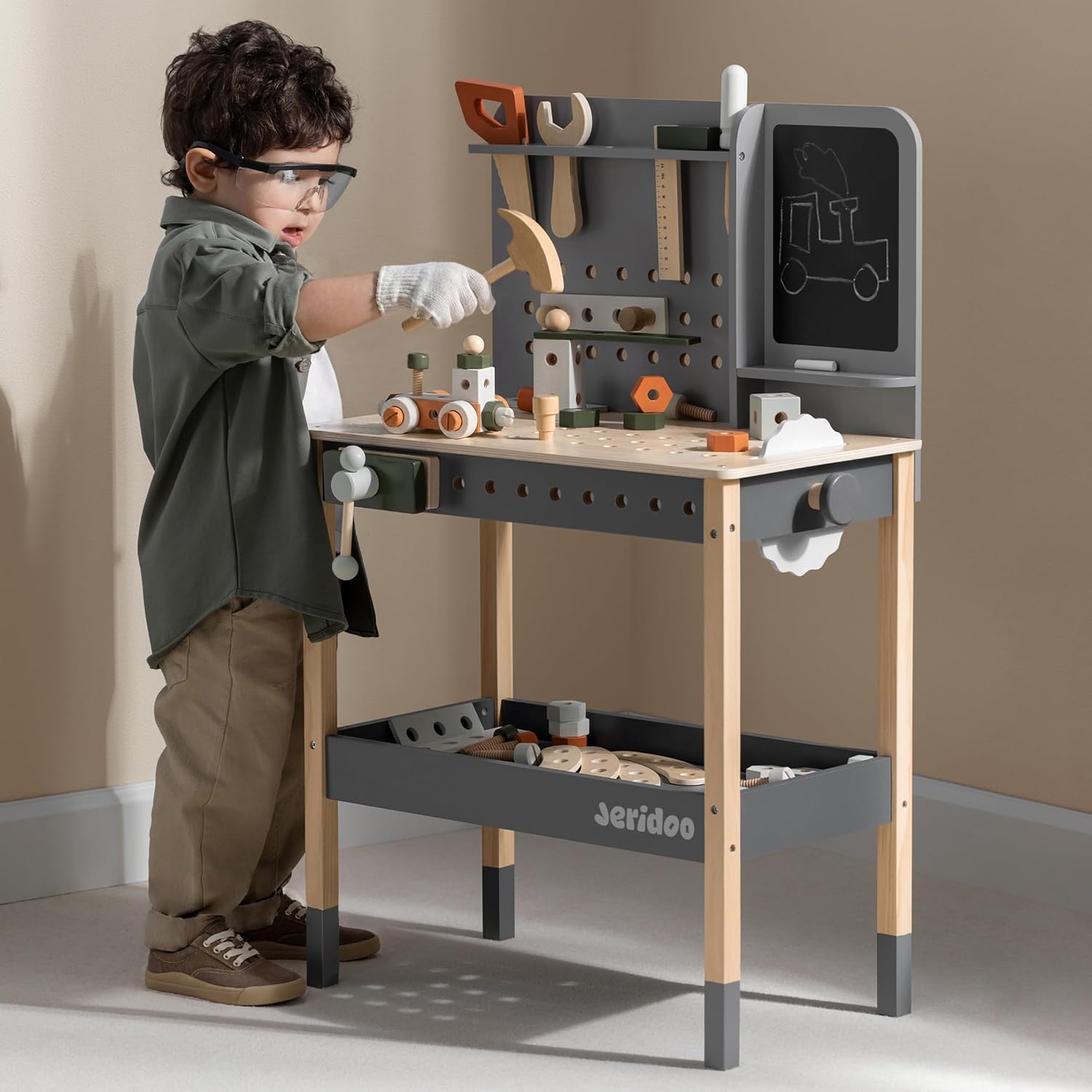
Parents looking for toys that offer more than a few minutes of entertainment often gravitate toward products that encourage children to build, create, imagine, and experiment. Jeridoo fits into this category with products designed around pretend play, construction, creativity, and practical skills. One of the brand’s clearest examples is its Little Crafter’s Workshop, a 61-piece wooden workbench set created for children ages 3 and up. The set combines a child-sized workbench with tools, accessories, storage, a chalkboard, and a measuring grid.
What makes Jeridoo particularly interesting is that its products are positioned at the intersection of traditional pretend play and educational activity. Rather than relying exclusively on screens or electronic features, the brand’s wooden workbench encourages children to manipulate objects, use their hands, imitate adult activities, and invent their own scenarios. The Jeridoo name is also associated with a broader trademark application covering toys, building games, toy construction sets, dolls, plush toys, puzzles, playhouses, and other children’s products, suggesting a wider toy-oriented direction for the brand.
Is Jeridoo Worth Buying?
Jeridoo is worth considering for parents who want toys that encourage active participation rather than passive entertainment. Its Little Crafter’s Workshop is especially appealing because it gives children an entire pretend-workshop environment instead of just providing a handful of toy tools.
Another attractive element is the wooden construction. Compared with inexpensive plastic toy tool sets, a wooden workbench can have a more substantial presence in a playroom and can contribute to a more classic, furniture-like appearance. The Jeridoo set is described as using solid wood with non-toxic finishes, although buyers should verify the current Amazon product description for the exact materials and safety information before purchasing.
The inclusion of storage is also practical. A common problem with children’s construction toys is that individual accessories eventually become scattered throughout the house. The Jeridoo workbench includes a storage shelf, giving children a designated place to put their tools and components when playtime is finished. That can turn cleanup into part of the play routine.
How does Jeridoo compare to competitors?
The children’s pretend-play market includes several established names, including Melissa & Doug, Step2, Hape, KidKraft, and numerous smaller Amazon brands. Jeridoo competes primarily through the combination of a relatively extensive accessory set and a traditional wooden-workbench format.
Melissa & Doug, for example, has long been associated with wooden educational and pretend-play toys, while Step2 is particularly prominent in larger plastic playsets and children’s activity products. Jeridoo’s approach sits somewhere between these categories: its Little Crafter’s Workshop uses a wooden workbench while providing a substantial collection of accessories designed to make the station feel like a miniature workshop. The 61-piece configuration is one of the main attractions because the child isn’t limited to one activity.
The visual style is another difference. Jeridoo’s workshop uses a relatively neutral beige-and-gray appearance rather than relying heavily on bright primary colors. This can make the toy easier to integrate into modern playrooms, bedrooms, or shared living spaces. The design also includes a chalkboard, storage shelf, and measurement grid, giving the workbench the appearance of a miniature functional workspace.